Creative Branding for Service Businesses: How to Stand Out Without Chasing Trends
"Creative" branding sounds like a compliment until you realize your brand already looks dated six months after launch. You invested in a beautiful logo, cohesive color palette, and polished website. Everything looked stunning on launch day. Then, somewhere between spring and summer, you noticed that your brand doesn't feel fresh anymore. The trend that inspired your entire visual identity has moved on. You're left wondering: how did this happen so fast?
The truth is that there's a fundamental difference between creative branding and strategic branding. Knowing which one you actually need could be the most important brand decision you make. Service businesses (agencies, consultants, designers, coaches, and firms that compete on expertise and relationships rather than products) have a unique branding challenge. Their brand needs to communicate trust, stability, and professional depth. Not just visual novelty. That's where the distinction between trendy and distinctive becomes everything.

Why Trendy Branding Often Backfires
Let's be honest: the branding world loves trends. Every year, design publications announce "the color palette of 2026" or "why your brand needs a bold serif font." There's nothing wrong with staying current. The problem emerges when creative choices drive your entire brand strategy instead of serving it. This is where strategic branding services matter. They ground visual decisions in who you actually are, not what's trending.
When visual creativity gets ahead of brand strategy, you end up with something that looks stunning but doesn't actually solve your business problems. You might have a gorgeous logo that impresses your own team but confuses your target audience. You might have chosen a trendy typeface because it felt fresh without considering how it communicates your brand's personality. You might have selected a color palette based on what's popular in your industry without thinking about how it differentiates you from competitors.
Consider brands that looked absolutely stunning five years ago and faded fast. Some chose design directions so deeply rooted in a specific moment that they became instantly recognizable as products of that time. Others went so far in pursuit of "creative" that they abandoned clarity. Their audience wasn't sure who they were, what they did, or why they should care. The visual design was impressive. But it didn't build equity. It became a liability.
Here's what actually matters to your audience: they need to understand who you are, trust that you can solve their problem, and feel confident choosing you over alternatives. Your audience doesn't wake up hoping to see the latest design trends reflected in your brand. They want to know that you're professional, dependable, and worth their investment. That's the insight that separates brands that compound in value from ones that feel tired a season later.
The Difference Between Trendy and Distinctive
Let's define these two approaches clearly, because the distinction changes everything about how you build your brand.
Trendy branding follows what's popular right now in your industry. If everyone in your competitive space is using sans-serif fonts, you use a sans-serif. If the trend is bold, saturated colors, you adopt bold, saturated colors. If minimalism is in, you embrace white space. Trendy branding asks: "What are successful brands doing right now?" It's responsive, it feels current, and it positions your brand within the visual language of your industry.
Distinctive branding is built around your specific positioning, your target audience, and your authentic voice. It might incorporate current design elements. But those elements serve a larger strategic purpose. Distinctive branding asks: "What makes us different, and how do we communicate that in a way that resonates with the people we want to serve?" It stays current without being enslaved to trends because it's rooted in something deeper than the current moment.
The difference becomes obvious over time. Trendy brands age quickly. Five years later, they look dated because the design trends have shifted. They're easy to date by their visual language alone. "Oh, that's definitely a 2023 brand." Distinctive brands feel timeless. They might incorporate current elements. But those elements never overwhelm the core identity. You can't pinpoint exactly what era they're from because they're not designed to a specific moment. They're designed to endure.
Distinctive brands also compound in value. Every time someone encounters your brand, their brain is reinforcing the same visual and verbal language. That consistency builds recognition, trust, and preference. You're not starting over every season because you're chasing new trends. Instead, you're deepening the association between your visual identity and what you stand for. That accumulated equity is incredibly difficult for competitors to replicate.
How Your Brand Personality Should Lead Visual Choices
Here's where most branding processes fail. They start with aesthetics. A designer opens Adobe, thinks about the mood, and creates a beautiful visual direction. Then they try to retrofit a strategy onto that visual foundation. This process works backward. It shows.
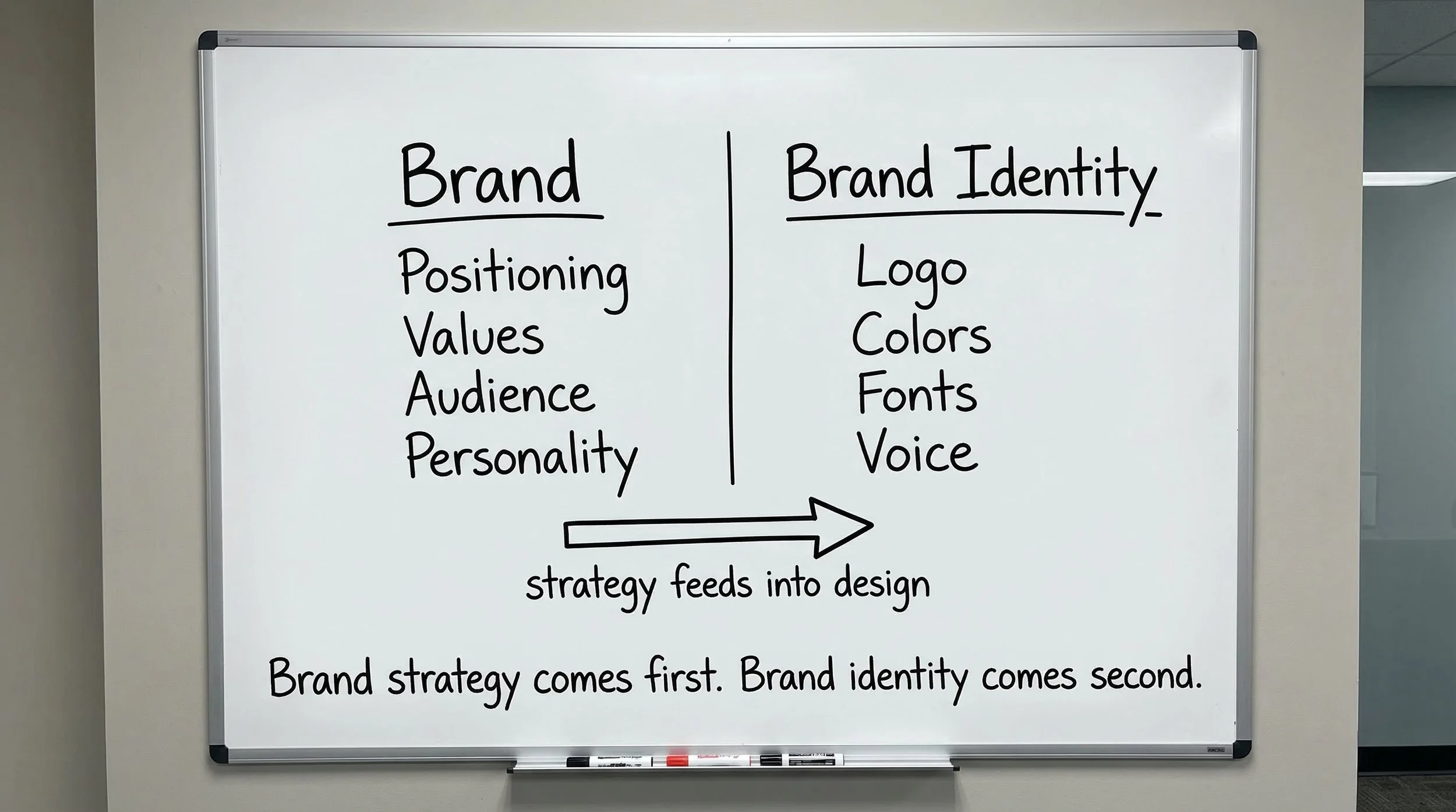
The right process is strategy first: start with who you are and what you stand for. Define your brand personality before you pick a single color. Understand your target audience, your positioning, and your unique value before you touch design. Only then do you move to brand voice, how you communicate. This is the time to review brand identity components at a high level. Then, finally, after all of that groundwork, you move to visuals. This strategy-first approach is the foundation of effective branding work that stands the test of time.
This order matters because each layer builds on the one before it. Your brand personality informs your voice. Your voice informs your visual choices. If you reverse this sequence, you'll find yourself compromising clarity at every step. You'll be trying to make a strategy fit a visual direction instead of making visual choices that serve your brand. Understanding how brand differs from identity helps keep you focused on strategy first.
Let's say you're a management consulting firm positioning yourself as the modern, approachable alternative to traditional strategy firms. If you start visually, you might choose bright colors, playful typography, and trendy design flourishes. But those choices don't actually communicate "strategic depth with approachability." They communicate "fun and informal." Now you're stuck trying to convince prospective clients that despite your cheerful visual identity, you're serious about helping them solve complex organizational challenges.
But if you start with personality, you know that your brand should feel sophisticated, grounded, and collaborative. That personality should inform a voice that's clear and directional without being stuffy. And those insights should drive visual choices: perhaps a refined color palette with one accent color that brings energy, typography that feels contemporary but substantive, and design that emphasizes clarity. Understanding color psychology and typography best practices ensures the visuals now serve your strategy instead of working against it. This is also where strong brand identity elements come to life.
Practical exercises matter here. Before you work with any designer, spend time defining your brand personality and positioning. What are your core values? How would you describe your brand as if it were a person? What does your target audience need from you emotionally, not just functionally? What would your brand never do or say? These conversations create the foundation for everything that follows. A brand audit can help clarify where you stand.
Building a Brand That Looks Good Now AND in 5 Years
You can create a brand that feels current without being enslaved to trends. The key is understanding which design principles have longevity and which ones don't. This is precisely what strategic branding partnerships focus on: creating visual systems that evolve with you rather than against you.
Timeless design principles, hierarchy, whitespace, legibility, proportion, and balance still feel fresh because they're rooted in how humans actually process visual information. A brand built on these principles will feel sophisticated and intentional whether you look at it in 2026 or 2031. These elements create foundation, not fashion.
Trends can absolutely be part of your brand, but use them as accents, not foundations. Maybe your typography is a contemporary serif that feels current. That's fine. But your color palette, your logo mark, and your overall composition should be rooted in timeless principles. That way, if serif fonts fall out of favor, you can evolve your typography while your overall brand architecture remains strong.
Brand guidelines are your insurance policy here. When you have clear, comprehensive guidelines that articulate how your brand works — why colors were chosen, how typography functions, when and how trends can be incorporated — you're setting yourself up for consistency through change. Those guidelines keep you moving with intention instead of chasing novelty. When paired with a brand consistency checklist, you maintain alignment across all platforms. This discipline is what separates graphic design from brand design.
The signs that your brand has longevity built in are clear. Does your visual identity communicate something about who you are, not just what's cool right now? Can you explain why you made each major design choice? Does your brand feel distinctive within your industry? Would you feel confident using this brand five years from now? Can you imagine it evolving without feeling dated?


Service Businesses with Standout Brands
Service business branding is uniquely challenging. Unlike product companies, you can't point to what you do with a physical object. Your value lives in expertise, process, and relationship. That means your brand needs to communicate through personality and credibility in a way that product branding doesn't always need to. When you invest in focused branding services designed specifically for service businesses, you position yourself to compete on value rather than price.
The service businesses with the most standout brands aren't the ones trying hardest to be visually innovative. They're the ones who have clarity about who they are and genuine consistency in how they show up. A brand that communicates "we're strategic thinkers who care about your business" outperforms a brand that communicates "we're creative and trendy" in service industries every single time.
Look at firms that have built recognizable, durable brands in competitive service spaces design agencies, consulting firms, marketing agencies. The ones that feel distinctive do it by being genuinely clear about their positioning and their personality. They make bold choices about who they serve and how they communicate. Those choices might not be what's trending, but they're authentic. And that authenticity, combined with consistency, is what builds brand equity in the service world.
What you can take from these examples for your own brand: first, commit to clarity. Be specific about who you serve and why you serve them differently. Second, let that clarity inform every visual and verbal choice. Third, create constraints that keep you consistent. And fourth, be willing to resist trends that don't serve your positioning.
Standout Brands Aren't Built on Trends
Standout service business brands aren't built on trends. They're built on clarity (clarity about who you are, what you stand for, and who you're here to serve). They're built on strategy that precedes design, consistency, and the courage to look distinctive rather than identical to competitors.
When you build your brand this way, something remarkable happens. You don't feel the pressure to redesign every season because the trends shifted. You don't wake up one morning realizing your brand looks dated. Instead, you have something that compounds in value. Every customer interaction, every piece of marketing, every team member conversation reinforces the same brand identity. That accumulated equity is the opposite of trendy. It's powerful.
Ready to build a distinctive brand that stands the test of time? Our branding services focus on strategy before design. We can audit your current brand positioning and help you move from trend-chasing to timeless strategy. Let's talk about your brand. When combined with understanding your brand identity elements, maintaining visual consistency, and defining a clear brand voice, you create something remarkable.
When you build your brand this way, you have something that compounds in value. Let's talk about building a brand strategy that works for your service business. Let's work together.